
Pick five or six easy crops, time your planting to your last frost date, and your first vegetable garden will actually feed you by midsummer. This guide covers the best beginner vegetables, real spacing numbers, and the timing mistake that kills most new gardens.
Your first vegetable garden works best if you keep the list short — five or six crops you'll actually eat, not fifteen you got excited about in a seed catalog back in January. Pick a spot that gets at least 6 hours of direct sun, and start with a bed no bigger than 4x8 feet. That size keeps weeding and watering manageable while you learn how your yard behaves through a full season, and you can always expand next year once you know what grew well.
Bush beans and radishes are the fastest confidence boosters. Direct-sow bush beans about 1 inch deep and 3 inches apart once your danger of frost has passed and nighttime temps hold above 50°F — seeds just rot in cold, wet soil if you rush them. Radishes go in the ground 3-4 weeks before your average last frost date, spaced 1 inch apart, and most varieties are ready to pull in 25-30 days. Sow a new short row every 2 weeks through late spring instead of one giant row, so you get a steady trickle of radishes instead of forty at once.
Tomatoes and peppers are worth buying as young transplants your first year rather than starting from seed — nurseries have already done the tricky 6-8 week indoor seed-starting for you. Wait to set them out until 1-2 weeks after your last frost date, once nights stay reliably above 50°F, and space tomato plants 24-36 inches apart so air moves through the leaves and cuts down on disease. The classic rookie mistake is planting too early because a warm week fools you in March or April, and a late frost can kill transplants overnight — watch your local forecast, not the calendar. Also worth knowing: tomato and potato foliage is toxic to cats and dogs, so keep plants out of reach if your pets like to chew on things.
Zucchini and other summer squash reward very little effort — one or two plants spaced 3 feet apart usually out-produce what a family of four can eat, so resist planting a whole row. Leaf lettuce is the easy cool-season counterpart: direct-sow or transplant it 2-3 weeks before your last frost, thin seedlings to 6-8 inches apart, and expect baby leaves in about 30 days. If squash bugs or aphids show up, check leaf undersides for eggs and hand-pick or hose them off before reaching for any spray, and cover young plants with row covers early on to keep pests off in the first place. If any product's label calls for it, follow the directions exactly, but for most backyard beginners it never gets that far.
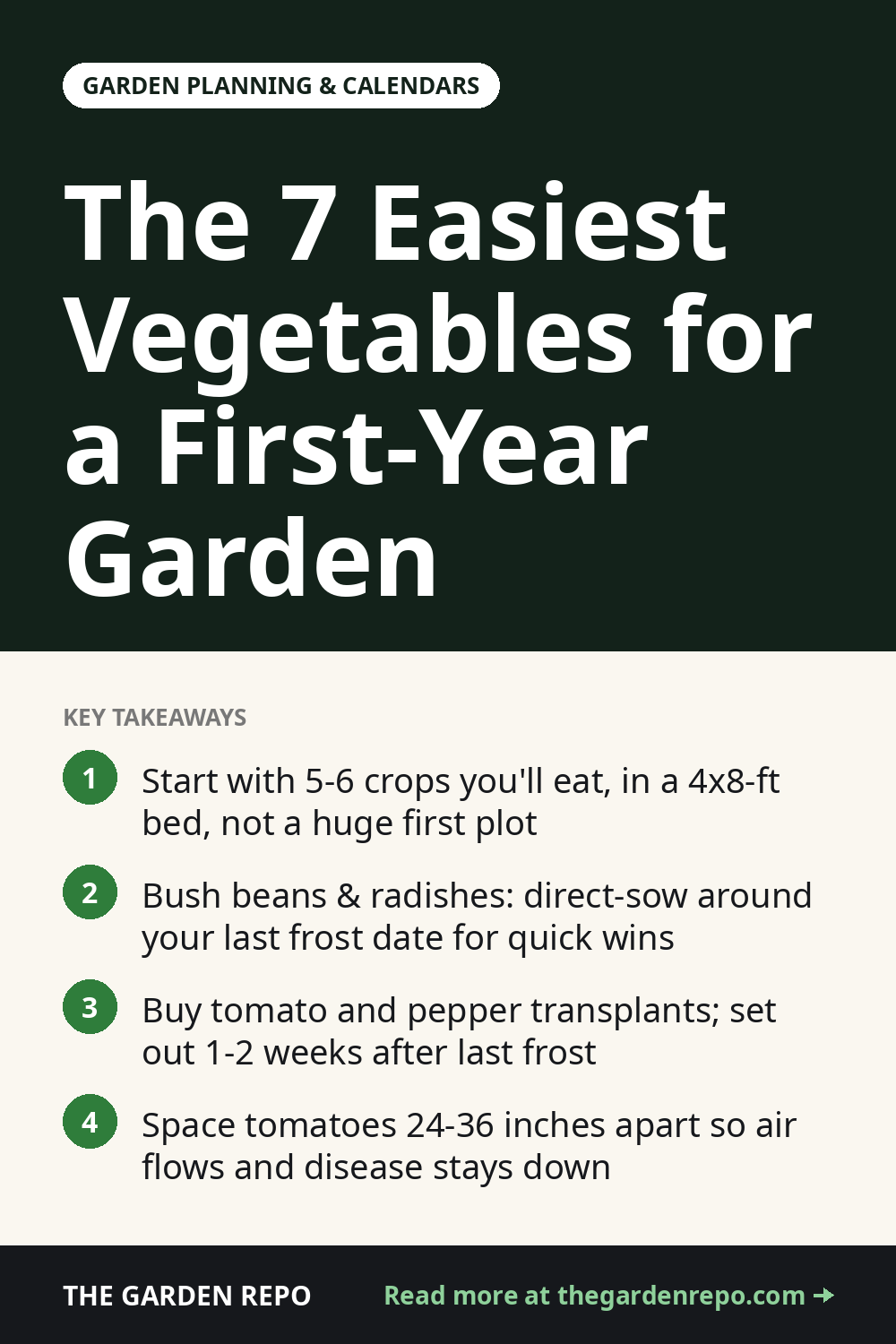
Key Takeaways
- ✅ Start with 5-6 crops you'll eat, in a 4x8-ft bed, not a huge first plot
- ✅ Bush beans & radishes: direct-sow around your last frost date for quick wins
- ✅ Buy tomato and pepper transplants; set out 1-2 weeks after last frost
- ✅ Space tomatoes 24-36 inches apart so air flows and disease stays down
- ✅ One zucchini plant can feed a family — skip planting a whole row
- ✅ Tomato and potato foliage is toxic to cats and dogs
Timing in this guide is counted from the average last frost date. Frost dates are averages, so check your local date before you plant.