
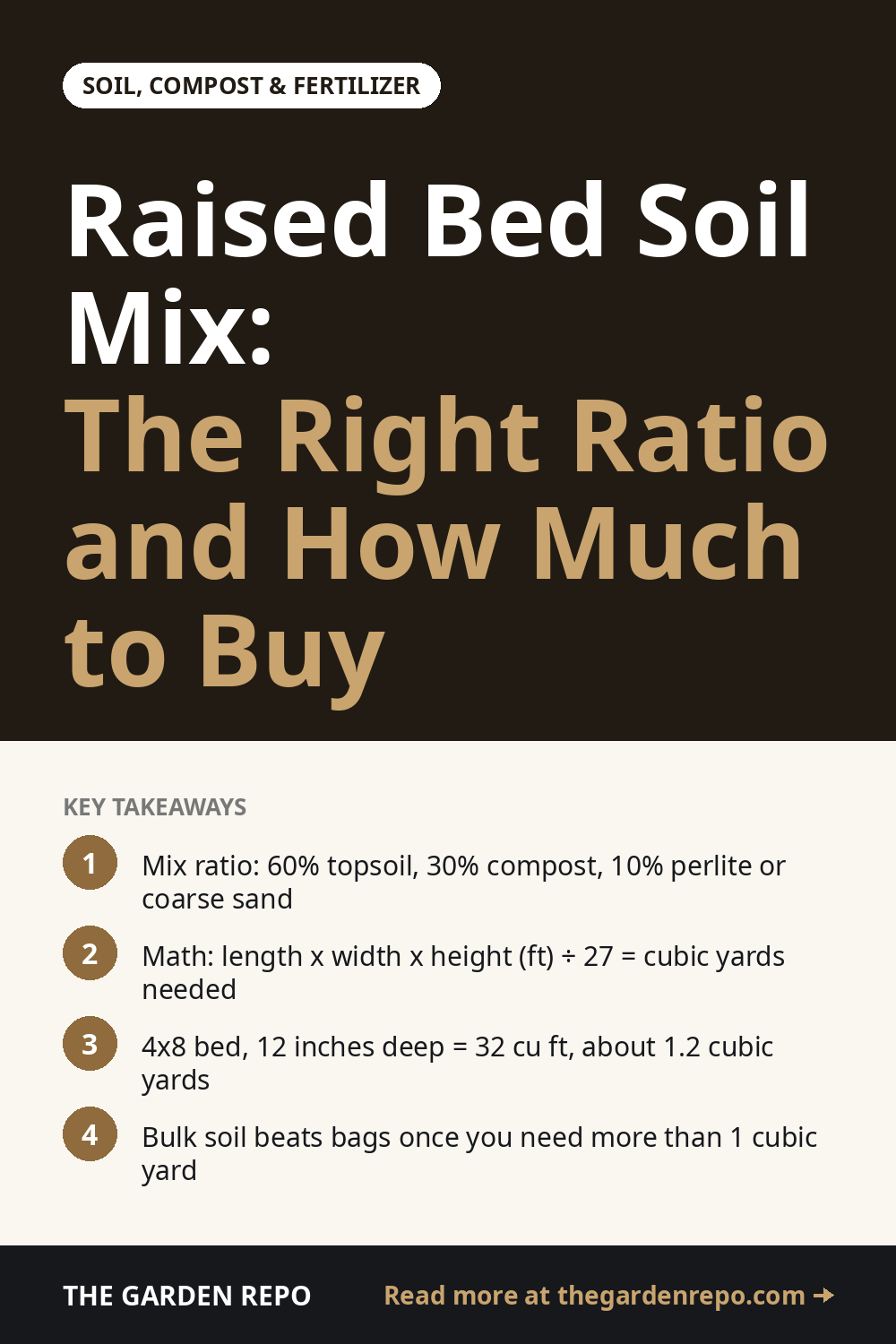
Get the raised bed soil ratio right the first time: 60% topsoil, 30% compost, 10% aeration material. Includes the simple math to figure out exactly how many cubic yards your bed needs before you order.
The mix that works for most vegetable and flower beds is roughly 60% topsoil or screened native soil, 30% compost, and 10% coarse material like perlite, pine bark fines, or coarse sand. That ratio mimics good loam: enough body to hold moisture and nutrients, enough compost to feed plants, and enough grit to keep the whole thing from turning into a brick after a few rainstorms. Straight topsoil or straight compost both cause problems on their own — topsoil compacts and drains poorly in a contained bed, and all-compost mixes can be too rich and soggy for root crops like carrots.
To figure out how much you need, multiply length x width x height, all in feet, to get cubic feet, then divide by 27 to get cubic yards. A standard 4-foot by 8-foot bed filled 12 inches deep needs 32 cubic feet, which is about 1.2 cubic yards. If you're buying bagged soil, most bags hold 1.5 cubic feet, so that bed takes around 21-22 bags — at that point bulk delivery from a local landscape supply yard is almost always cheaper per cubic foot and saves you a dozen trips hauling bags.
One mistake that trips up a lot of first-year gardeners: sourcing compost or composted manure from an unknown pile that was treated with broadleaf herbicide (common in hay and some lawn clippings). Those chemicals can survive composting and stunt or twist tomatoes, peppers, beans, and peas for an entire season. Before filling a whole bed, do a quick germination test — grow a few bean or pea seeds in a scoop of the compost alone and watch for curled, distorted leaves within 2-3 weeks; if you see that, don't use the batch.
Fill your bed 2-3 weeks before your average last frost date so the mix has time to settle before you plant — new mixes typically settle 10-15% in the first season as air pockets compress. Check your local last frost date if you don't know it, since it varies widely even within the same state. Plan to top off the bed with 1-2 inches of fresh compost every spring after that, since the organic matter breaks down and the level drops a bit each year.
Key Takeaways
- ✅ Mix ratio: 60% topsoil, 30% compost, 10% perlite or coarse sand
- ✅ Math: length x width x height (ft) ÷ 27 = cubic yards needed
- ✅ 4x8 bed, 12 inches deep = 32 cu ft, about 1.2 cubic yards
- ✅ Bulk soil beats bags once you need more than 1 cubic yard
- ✅ Test unknown compost/manure on beans first — herbicide residue stunts tomatoes
- ✅ Fill 2-3 weeks before last frost; top off 1-2 inches of compost each spring
Timing in this guide is counted from the average last frost date. Frost dates are averages, so check your local date before you plant.