Skip the bags of garden soil and fill your raised bed with free logs, leaves, and bulk compost instead. This layering method (a version of hugelkultur) cuts costs dramatically and builds better soil over time.
A standard 4x8-foot raised bed with 12-inch sides holds about 32 cubic feet of growing space, and if you try to fill that entirely with bagged garden soil from the hardware store, you'll spend a lot more than you need to. The trick experienced gardeners use is to fill the bottom two-thirds with free or cheap bulky material and save the good stuff for the top layer where your plant roots actually live.
Start by laying flattened cardboard (no glossy tape or heavy ink) directly on the ground to smother grass and weeds. On top of that, pile in logs, branches, and brush you'd otherwise haul to the curb, then layer fallen leaves, straw, or grass clippings over that. This is a simplified hugelkultur approach, and it works because the wood slowly breaks down over a year or two, feeding your soil and holding moisture like a sponge, which means less watering for you come summer.
Fill the remaining top 6-8 inches with a blend of finished compost and quality topsoil, roughly half and half. Buying compost and topsoil in bulk by the cubic yard from a local landscape supply yard costs far less per cubic foot than buying it bagged, and most yards will deliver for a flat fee if you're filling more than one bed. The common beginner mistake here is mixing fresh wood chips or un-composted bark directly into that top planting layer; as they break down they tie up nitrogen in the soil and can stunt young plants, so keep fresh woody material in the lower layers only.
Timing matters too: fill your bed at least 2-3 weeks before your last frost date so the layers have time to settle and compost before you plant, or better yet, build it in fall and let it sit over winter. Expect the whole pile to sink several inches as the organic matter breaks down, so plan to top off with more compost each spring. Check your local last-frost date before you set a planting schedule, since it varies widely by zone.
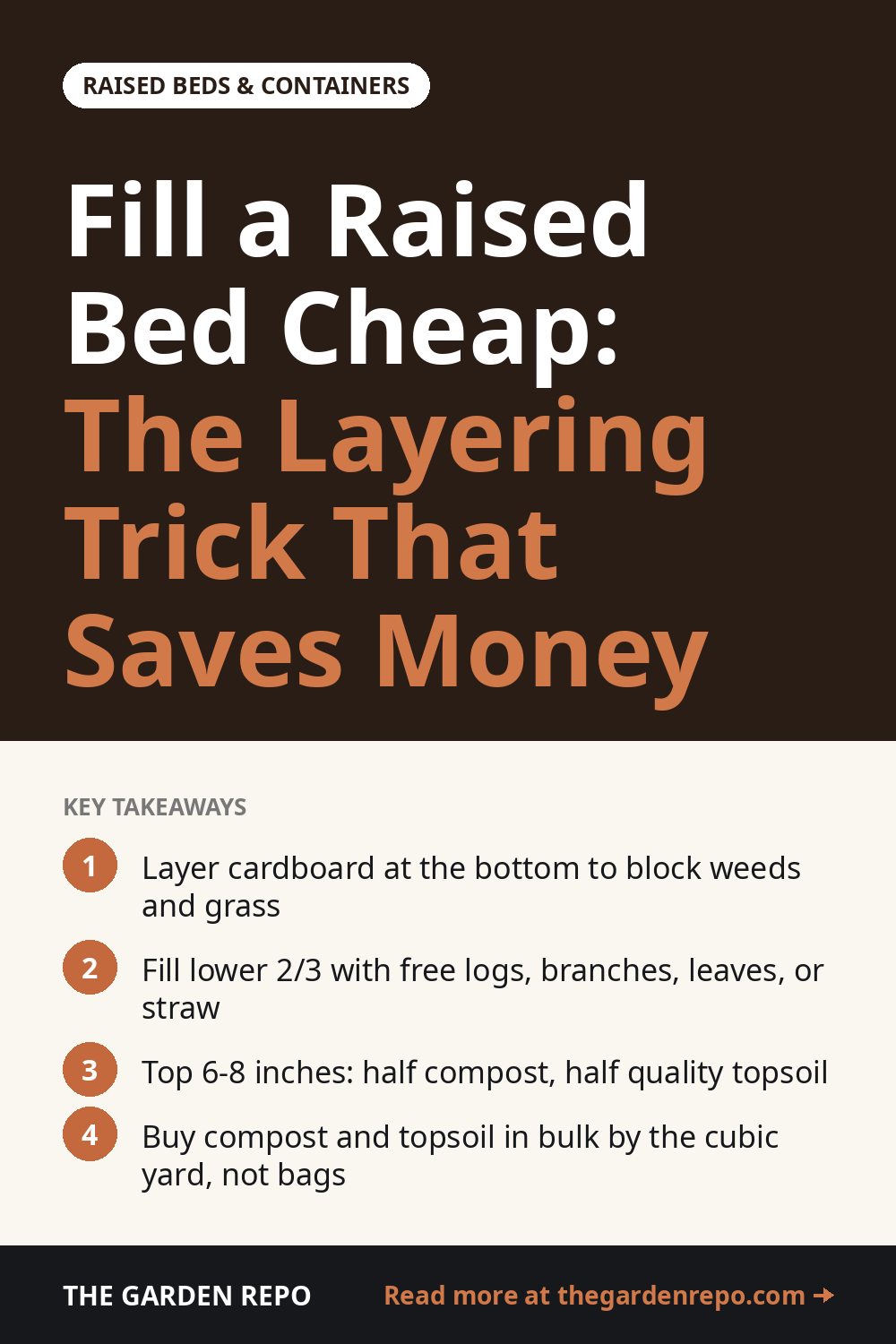
Key Takeaways
- ✅ Layer cardboard at the bottom to block weeds and grass
- ✅ Fill lower 2/3 with free logs, branches, leaves, or straw
- ✅ Top 6-8 inches: half compost, half quality topsoil
- ✅ Buy compost and topsoil in bulk by the cubic yard, not bags
- ✅ Keep fresh wood chips out of the root zone to avoid nitrogen tie-up
- ✅ Fill beds 2-3 weeks before last frost, or build them in fall
Timing in this guide is counted from the average last frost date. Frost dates are averages, so check your local date before you plant.