
Stop guessing when to start seeds indoors. Use your local last-frost date and each seed packet's timing to build a week-by-week starting schedule that actually fits your zone.
Every seed packet gives you a range like 'start 6-8 weeks before last frost,' but that number is useless until you know your own last-frost date. Look yours up through your state extension office or the Old Farmer's Almanac site by zip code, then write it on your calendar as week zero. Everything else gets counted backward from that single date, not from today's date or a fixed day like March 1st, because frost dates swing by weeks between a zone 5 garden and a zone 8 garden.
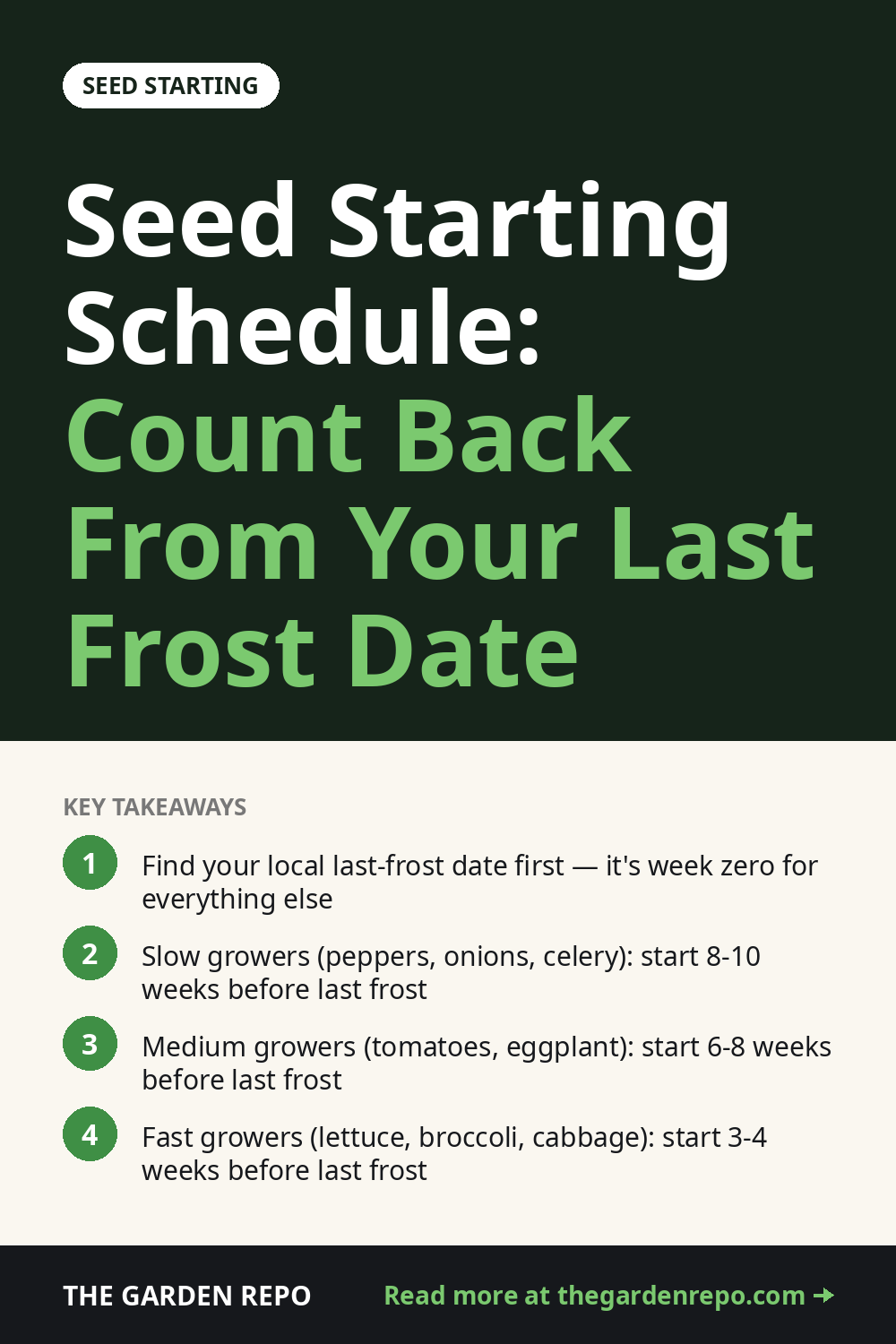
Once you have that anchor date, sort your seeds into three rough groups: slow growers started 8-10 weeks out (peppers, onions, celery), medium growers started 6-8 weeks out (tomatoes, eggplant), and fast growers started 3-4 weeks out (most lettuce, brassicas like broccoli and cabbage). Grab a dozen seed packets and you'll see the 'weeks before last frost' line right on the back under planting instructions. Mark each start date on a calendar or phone reminder so you're not eyeballing it in week 12 and realizing your peppers should've gone in a month ago.
The most common beginner mistake is starting everything the same weekend because it feels efficient. Tomatoes started 10 weeks early instead of 6-8 get leggy, root-bound in their little cells, and stressed before they ever see the garden, which sets them back more than starting them a bit late would. If you're not sure how many weeks out you are from your last frost today, count forward on a calendar rather than guessing by the month, since 'early May' means something very different in zone 4 than in zone 9.
Direct-sow crops like carrots, beans, peas, and squash skip this indoor countdown entirely and get planted straight into the garden on their own frost-relative schedule instead, usually right around or a couple weeks after last frost once soil has warmed. Before you transplant anything started indoors, harden it off over 7-10 days by setting trays outside for a few hours a day in a sheltered spot, increasing sun and wind exposure gradually. Skipping hardening off is the second most common mistake and it can stunt or kill transplants in a single windy afternoon, even if your frost-date math was perfect.
Key Takeaways
- ✅ Find your local last-frost date first — it's week zero for everything else
- ✅ Slow growers (peppers, onions, celery): start 8-10 weeks before last frost
- ✅ Medium growers (tomatoes, eggplant): start 6-8 weeks before last frost
- ✅ Fast growers (lettuce, broccoli, cabbage): start 3-4 weeks before last frost
- ✅ Beans, peas, carrots, squash: skip indoor starting, direct-sow near frost date
- ✅ Harden off transplants outdoors for 7-10 days before planting in the garden
Timing in this guide is counted from the average last frost date. Frost dates are averages, so check your local date before you plant.