A 4-foot-wide, 8-foot-long raised bed is the sweet spot for first-year vegetable gardeners because you can reach the center from either side without stepping on the soil. Here's how to size, fill, and lay out your first beds so you're not fighting the design all season.
Four feet wide is the magic number for raised beds, no matter how long you make them. Most adults can comfortably reach about 2 feet into a bed from each side, so a 4-foot width means you never have to step on the soil to weed or harvest the middle rows. If you can only access the bed from one side (say it's against a fence), cut that width down to 3 feet. Length is flexible, but 8 feet is a common starting point because it uses standard lumber without extra cuts.
Depth matters more than beginners expect. Go at least 10-12 inches deep for most vegetables like lettuce, beans, and peppers, but bump that up to 16-18 inches if you want to grow carrots, parsnips, or other long root crops, especially if your native soil underneath is heavy clay. A common mistake is building a shallow bed and setting it right on top of compacted clay or a gravel driveway, which gives roots nowhere to go even though the raised portion looks deep enough. If your soil below is rock-hard, loosen the top 6-8 inches with a digging fork before you fill the frame.
Lay out your plants by height, not habit. Put tall crops like pole beans, trellised cucumbers, and staked tomatoes along the north end of the bed so they don't shade shorter plants like lettuce, spinach, or carrots as the sun moves through the day. Because you never walk in a raised bed, you can space plants tighter than you would in a traditional row garden; bush beans that need 18-24 inches between rows in open ground can go 4-6 inches apart in all directions in a raised bed. Time your actual planting to your zone and local last frost date; cool-season crops like lettuce and peas can go in 2-4 weeks before that date, while tomatoes and peppers wait until after it.
For materials, skip any old treated lumber you find lying around, since pre-2004 pressure-treated wood contained arsenic compounds; new pressure-treated lumber, untreated cedar, pine, or cinder block are all fine choices for food crops. Cinder block can slowly raise soil pH over a few years, so a yearly soil test is worth doing if you go that route. Fill with a mix of roughly 60% topsoil and 40% compost rather than straight bagged garden soil, which compacts fast and drains poorly on its own. Start with two 4x8 beds your first season instead of five; it's much easier to expand next year than to un-build a bed you overcommitted to.
Key Takeaways
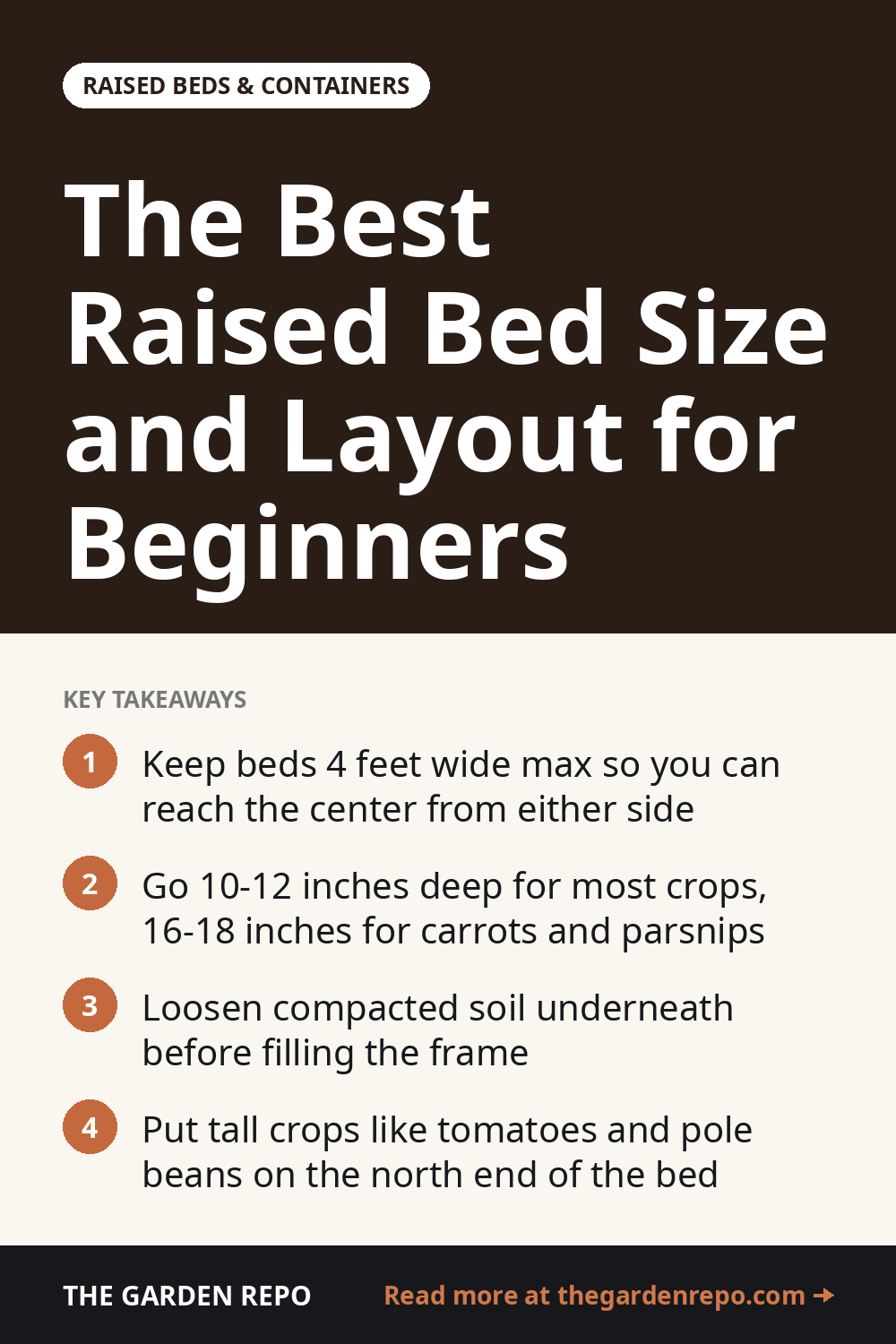
- ✅ Keep beds 4 feet wide max so you can reach the center from either side
- ✅ Go 10-12 inches deep for most crops, 16-18 inches for carrots and parsnips
- ✅ Loosen compacted soil underneath before filling the frame
- ✅ Put tall crops like tomatoes and pole beans on the north end of the bed
- ✅ Space plants tighter than row gardens since there's no walking path to leave
- ✅ Start with two 4x8 beds your first year, not five
Timing in this guide is counted from the average last frost date. Frost dates are averages, so check your local date before you plant.